

Review: Cameron Crowe’s “The Uncool” Conversation With Luke Wilson — A Night of Heart, History, and Missed Opportunities
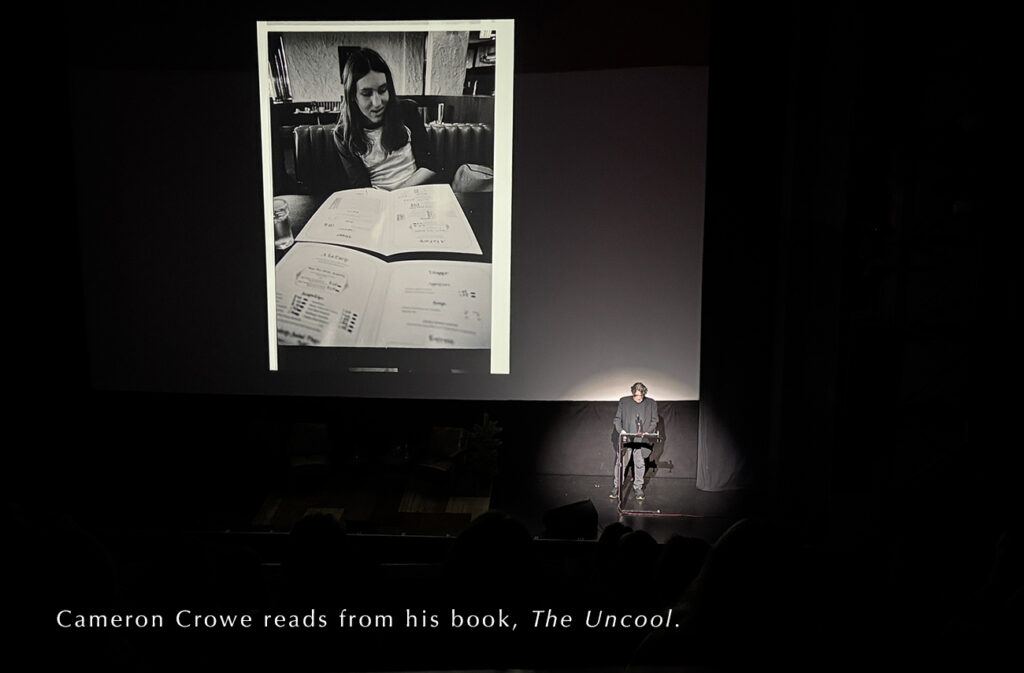
Cameron Crowe has built a career on shaping stories with rhythm and intention—both on the page and on screen. Which is why his two-plus-hour event at the Montalbán Theater, a conversation with Luke Wilson to promote his memoir The Uncool, felt surprisingly lopsided. There were sincere moments of nostalgia, hints of the magical storytelling Crowe is known for, and a genuinely compelling reading from the book itself. But the evening struggled under an imbalanced structure and a puzzling use of multimedia that never rose to its obvious potential.
An Hour-Long Montage That Set the Wrong Rhythm
The night opened with a full hour of projected images: bands, backstage moments, magazine covers—decades of Crowe’s life in music journalism. The content itself was enjoyable, even affectionate, but the pacing was off. Instead of warming the room up, the montage felt like an overture with no clear indication of when the main event would begin. For a writer-director famous for soundtracks and cinematic timing, the choice was oddly static.
Crowe’s Reading: The Highlight of the Night
When Crowe finally appeared onstage to read a chapter about his pivotal interview with Gregg Allman, the evening snapped into focus. His writing—sharp, soulful, and funny—reminded the audience exactly why his memoir exists. The Allman story is one of Crowe’s most mythologized experiences, and hearing it in his own voice was the most compelling stretch of the entire program. It was intimate, reflective, and beautifully paced.
If the event had continued in that vein—storytelling, guided by a curated set of images or clips—it might have blossomed into something truly memorable.
Luke Wilson Joins… but the Multiscreen Chaos Persists
Luke Wilson entered with genuine admiration and an easy rapport. The two reminisced warmly, and there were flashes of the candid, lived-in humor you’d expect from longtime collaborators. But the giant screen behind them seemed to have a mind of its own: flipping through random stills, sometimes adjacent to the topic at hand, sometimes wildly unrelated.
It created an odd disconnect—like watching two people trying to have a sincere conversation while someone shuffled through a disorganized scrapbook at double speed.
Given Crowe’s visual legacy—from Almost Famous to Jerry Maguire—this mismatch between form and content felt particularly distracting.
A Late-Arrival Guest and Another Missed Opportunity
Around the ninety-minute mark, Crowe’s longtime friend and photographer, Neal Preston, took Luke Wilson’s seat. This should have been a moment where the multimedia shined: a photographer describing iconic, history-book-worthy shots while those very images lit up the theater.
Instead, the screen displayed…the event’s advertising poster.
Hearing about legendary photos—like the final shot in front of the Continental Hyatt House—while looking at a static graphic felt like watching someone describe fireworks with the curtains closed. The substance was strong, but the presentation never lifted it.
A Night of Heart, But Not of Vision
There’s no question that Crowe’s life and career contain multitudes—stories that could fill nights on end with behind-the-scenes anecdotes, music history, and the emotional honesty that makes him a singular storyteller. And The Uncool clearly contains that richness; the Allman chapter alone proved it.
But the event itself, intended to celebrate the memoir, never found a cohesive narrative spine. Instead of a guided walk through memories—clips, backstage photos, flares of inspiration—it circled one story deeply and skimmed the rest. The visuals, which should have been the connective tissue, were instead erratic background noise.
For a filmmaker so deeply associated with the visual language of nostalgia, it felt like a rare mismatch between form and intention.
Final Thoughts
Fans of Crowe will have enjoyed the warmth, humor, and humanity he brings simply by being himself. But as a structured event, the evening at the Montalbán Theater left much on the table. It hinted at what it could have been—a multimedia memoir come to life—but settled for something looser, gentler, and ultimately less impactful.
Crowe’s stories deserved a clearer frame. Thankfully, The Uncool itself seems ready to provide one.